Industry playbooks
Auto repair appointment reminders for drop-off and pickup
Help drivers understand drop-off, diagnosis, approval, repair status, and pickup without letting a booking text imply a repair quote.
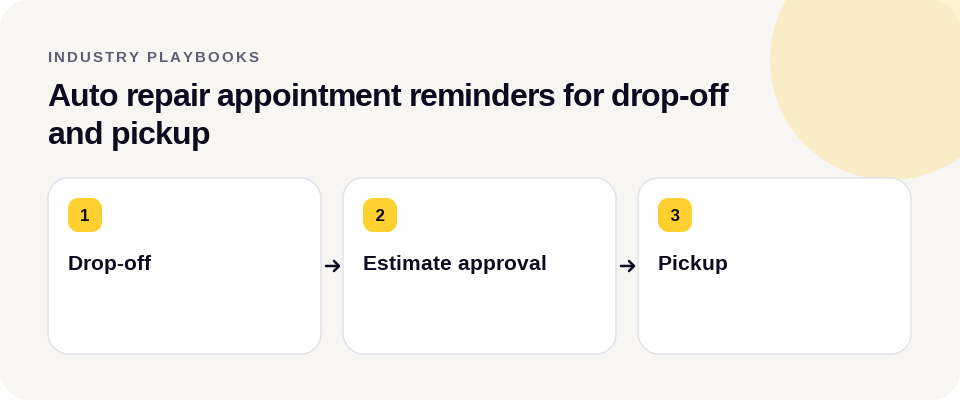
Tell drivers which milestone they are being reminded about
A calendar marked “appointment at 8:00” may mean the customer can drop off a vehicle then, not that a technician starts at eight or that it will be ready by noon. Service advisors know the difference, but first-time customers often don’t. On every booking record, distinguish the drop-off window, the expected time for the next update, and the actual pickup status. If planning is fluid, send a realistic window and identify what remains unconfirmed. An automated message that sounds like a promise about completion can create avoidable conflict when a part is late or a technician needs more time.
Drop-off and waiting appointments need different directions. A customer who plans to wait may have arranged work around a shorter visit. Say whether their request to wait is explicitly confirmed and explain where to check in. If the shop has an after-hours key box, give the correct door and instructions only to booked customers using that process. Make it clear when the shop will next look at the vehicle. Use a location-specific message: a downtown garage with a gate should not inherit instructions from a suburban lot with a separate entrance.
Collect information a service advisor can use
Instead of prompting customers to submit a diagnosis, ask what they observe or when it happens. An example is “rattle after ten minutes on a rough road” rather than “replace the axle.” Use your normal intake workflow for detailed notes and supporting information. A reminder can say how to tell the shop about an issue before arrival, but should not solicit payment data or unnecessary documents by text. Ask for a reachable approval contact and the time window in which that person can respond. A technician shouldn’t have to hold a bay while a service advisor calls three household numbers.
Fleet bookings need separate drivers and decision makers. The driver may know the vehicle is coming but not be authorized to approve work. If you serve fleets, document where the written approval is recorded and what the driver should be told. Schools or businesses may have several vehicles on the same calendar day; ensure replies attach to the actual booking. A vehicle label in a booking confirmation can be useful where appropriate, but avoid showing unnecessary identifiers in messages that may get forwarded. When a customer substitutes a vehicle, review the appointment length and bay requirements before saying the existing slot works.
Keep authorizations separate from reminder replies
Confirming a visit is not approving a repair. An SMS “yes” might arrive after both a reminder and an estimate link, especially when a busy driver reads previews. Keep the estimate, decision, and repair status in a workflow that identifies what was approved and who approved it. The US FTC’s consumer guide recommends requesting a written estimate; your shop should follow its own approved authorization process and applicable rules, not substitute the reminder script for it. A link to a portal can be useful only when the customer can reach it and the shop records the actual decision independently.
If the inspection finds a delay, don’t send an old pickup estimate that was queued earlier in the day. Assign a service advisor to update the customer, then decide whether to recheck parts availability or offer a later status time. The customer needs to know whether the vehicle is safe to collect and what remains to be done, but that communication belongs to the shop’s responsible staff. A blanket automated text that tells every customer to pick up at closing time is worse than an honest update about when they will hear from you again.
Build a closing routine so the calendar and vehicles agree
At closing, compare vehicles on site against tomorrow’s schedule and the list of pending approvals. Mark finished vehicles ready only when the actual work status and collection process are settled. If an approval has not arrived by cutoff, tell the owner the next decision window; do not say a vehicle is fixed or ready. Discard pickup notifications from superseded estimates and note the person responsible for tomorrow’s callback. This is one of the few times a short internal checklist will improve customer messaging more than changing any copy.
Drill the process with a shared sample: a driver drops off early, the fleet manager does not respond, a part delivery is moved, and someone else calls to collect. Verify what each person sees, who can approve the repair, and whether the reminder system sends an incorrect pickup message. Test an estimate that is revised after the first link was issued. A correct workflow points to the latest proposal and preserves the earlier approval trail. The customer should never be left to decide which of two contradictory pickup texts is still true.
Measure arrival accuracy and update reliability
Count arrivals within the agreed drop-off window, vehicles held awaiting approvals, and incorrect pickup alerts. A no-show dashboard alone misses the hours that bays and phones are occupied by ambiguous handoffs. During the first review, sample appointment texts against actual repair orders and ask advisors which phrases generate questions. Clarify the two highest-volume ambiguities first. If fewer people need to call for directions and approvals arrive in time, the shop can improve capacity even when the total appointment volume is unchanged.
A test for advisors at handoff
Use a non-production work order for an 8:30 drop-off. Queue a status check but leave completion unconfirmed. Route the approval to a different test contact and then postpone the part before either person replies. The booking contact should get the status the shop is able to promise, and the approval contact should see the revised written estimate through the normal authorization process. Neither should receive a “vehicle ready” notice. Ask the next shift to summarize who owns the open work without reopening the thread. When the test is complete, check the service board against the sample receipts and estimate records, not just against the SMS log.